

The funniest thing about death and change is not that it happens - that people die, and leave us, and things change - but that the world just continues on turning like nothing happened. That we move on, and sometimes forget, but continue to carry. I am always surprised how quickly the world moves itself forward. Not that I am sad or grieving, but that things just go on.
We slow for a moment in time, feel and move and shift, and then we continue. It’s the funniest emotion - because it never stops itself from appearing even when we feel it becomes dormant. Like a sweet little creature, always curled and present in our chests, sometimes taking extra time to claw around our lungs or heart before settling again.
Grief is such a gift - to rage, to wail, to mourn, to cry is a gift. To be welcomed to new tables and into new lineages is a gift. To hold your ancestral magic and medicine deeply, to remember what has been forgotten is a gift.
If anything, ancestral veneration has assuaged my grief in ways I can not explain. To recognize that Death is not our ending, but a new beginning - that we always have access to our ancestors and ancestral magic, that we can lean into our bodies, our felt sense, our lost traditions and rediscover new ways to old traditions. I didn’t put pictures away, or dismiss my ancestors - they will continue to be fed, be honored, be loved throughout the year. I never walk alone, nor does anyone who reads this. I walk with all of the wisdom, teachings, and knowledge of my ancestors - whether they are people, plants, animals or spirits.
Our ancestors are not just those that are within our human, family line. My book, "Ancestral Magic" talks about various different forms of ancestors. Human ancestors, "include blood ancestors, lineage ancestors, and our Mighty Dead", with blood ancestors those via blood relation, lineage ancestors as human ancestors we may not be a part of the direct bloodline, but rather a part of the family via adoption, partnership, or spiritual lineage. The Mighty Dead are ancestors of community or elevated ancestors, those that share an identity, place, or other traits with you - such as ancestors of authorship, journalism, queerness, and more. Non-human ancestors, including ancestral plant allies, animal ancestors, land spirits, and spirit ancestors, including Saints and spirits of place. (You can purchase Ancestral Magic here or order a signed copy through our website).
In the year since this book released, I've leaned further into my animism and the belief that all things have a spirit. This teaching comes from Loretta Ledesma, The Death Witch, owner of Noctavia Obscure and my dear friend, which felt very practical in my own ancestral practice and Italian-American folk magic already. The conversations around hard animism versus soft animism, whether or not technology or "man-made" objects can contain spirits or if they are "alive" will continue until the end of time.
This leans into those spirits as ancestors - maybe the spirit of a song that your grandmother loved, or a style of music that is ancestrally relevant and that they knew. I think of the spirits of protection, of grief, of different elements that we can connect with from both a personal and a collective standard. This year, I'm challenging myself not just to cultivate an ancestral altar for Giorno dei Morti, but creating an altar to the spirit of Grief.
Guiding an altar for grief for yourself can look many different ways - but it begins with meeting the spirit of your personal grief. Not just what you're grieving, but what the spirit of Grief right now in your life looks like, as well as what ancestral grief may have looked like - how can we tap into the different phases of grief, our history and relationship with grief, and our ancestor's history with grief?
- How does grief surface for you, in your day to day?
- What are images, animals, colors, and scents that you associate with grief?
- How do you feel your grief in your body?
- What colors, scents, objects, or sensations do you associate with the different phases of grief?
Rooting into the spirit of grief allows us space to learn more about grief in our lives. What does it sound like? What songs do you associate with your grief? What helps you move through grief? How can connecting with the spirit of grief assist us in deepening our ancestral practice?
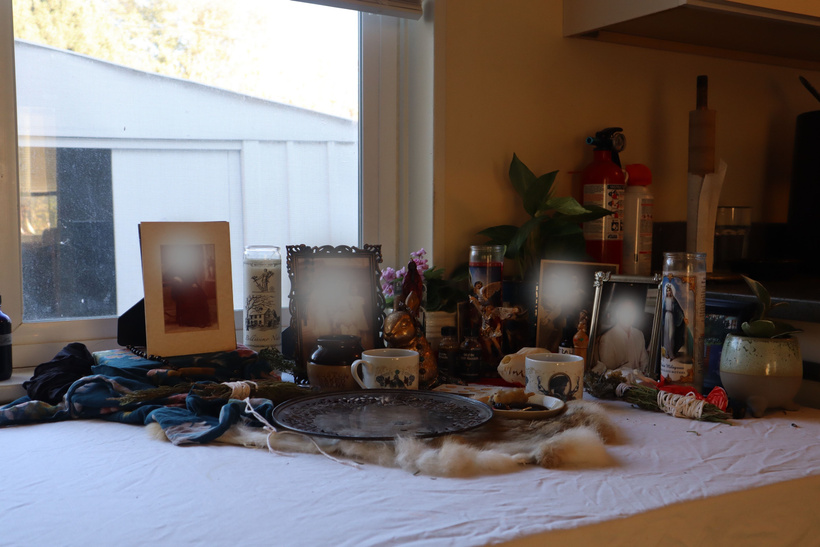
Giorno dei Morti is a holiday I have been celebrating for quite a while, beginning in 2023 and continuing onwards to this day. Giorno dei Morti is celebrated by Italian Americans and Italians alike, and represents a day to honor our dead.
This holiday is regional, similar to other days in the diaspora and within Italy, like la Notte di San Giovanni. Some regions, like Abruzzo & Veneto, prepare legumes. Other regions like Lombardy and Friulo Venezia-Giulia leave water and bread out to guide the dead home. Different sweets are prepared, my personal favorite being ossi dei morti, or bones of the dead cookies. Loved ones may bring food the cemeteries, including decorating and lighting candles at tombs or gravestones. Regional names also exist. In Abruzzo, this holiday is called L'Aneme de la Morti, in others, Festa di Morti.
One of the biggest aspects of this season is not just honoring the dead - it is inviting them home for a day to talk, share food, and be present with us once again. It is a holiday that centers on them - what they like, what they need, and giving them sustenance, our time, energy, and presence. Depending on the year, you may be able to make a trip to family's places of rest to offer food and say hello, or you may build something at home for those you love. Giorno dei Morti has been a day where I often cook, rest, and sit with my ancestors.
There are various ways to celebrate All Soul's Day, including visiting the graves of your ancestors to offer them food, flowers, and drinks they enjoyed, creating an altar for your deceased, visiting your local graveyards & cemeteries to give honor to the local dead, or doing something in devotion for your ancestors, such as cooking a traditional meal & inviting them to share it with you, spending the day speaking their native language, doing activities & hobbies they would enjoy. I always light a candle on the night of All Hallow's Eve (October 31st) to call my dead home and light their way - often in the window, placed on the altar, or at a central point in my household.
Altars are always optional, and this day can also be centered on deepening our practice with
Ancestral veneration doesn’t end when Giorno dei Morti does - it continues onwards. Healing generational wounds, reconnecting, carrying our ancestral medicine doesn’t stop when it becomes November 3rd - it continues onwards through our hands, guiding us and being present. This blog post is a guide for navigating any holidays referencing the dead, cultivating an ancestral space in your home, tending to roots of reconnective work, and more.
Inviting your Ancestors into your Home
This year in August, I taught a class via Salem Witchcraft and Folklore Festival about Ancestral Magic to go along with my book published in November of last year.
Another class will be held at Noctavia Obscure in November to go along with our For the Folk meetup on Rosemary about ancestor altars, calling ancestors in, and creating a space for our ancestors. You can sign up here for both our meetup on Rosemary and the class when they are listed!
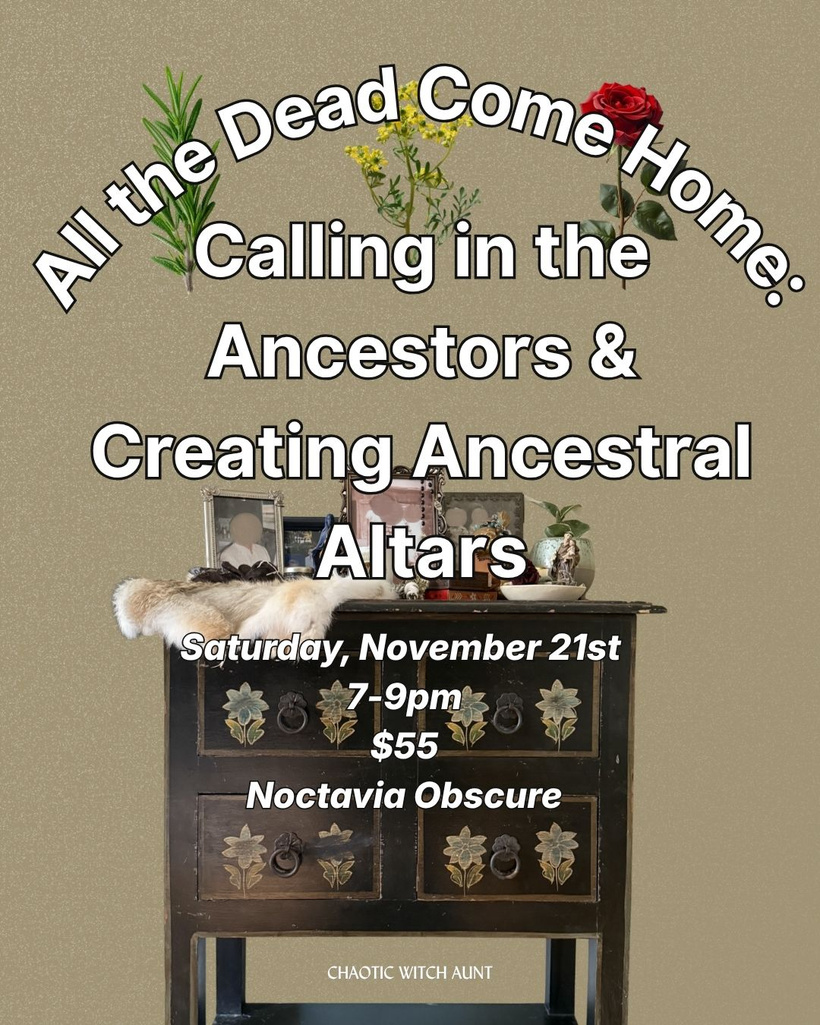
Altar making, for me, is a key part of calling ancestors home and inviting them into your home, but other aspects of this that I usually practice monthly, before calling in new ancestors, and especially around Giorno dei Morti include:
- Cleaning like company is coming. Cleanse frequently, including throwing salt around the corners and sweeping it inwards, smoke cleansing, floor washing and door-washing. If I'm doing a working with my ancestor, I tend to clean around the area where I am doing the work. For my family, cleaning intensely is one of the big ways I prepare for them to come home. Clutter, dirt, dust, and all other things are removed and swept up. Salt is thrown around the home to cleanse any energy that lingers.
- Gathering drink, food, and herbs they liked. For me, rosemary, rue, rose, and certain foods are always gathered the few days before. I make sure the cupboard is stocked with pasta and crushed tomatoes, that I have some ricotta on hand, and that I have all the ingredients I need for ossi dei morti cookies.
- Noticing what ancestors may need more tending to this year - which spirits are new? Which spirits are old? Which have been the most present this year, and the least present? What ancestors may need a bit more tending to this year?
A Floor Wash/Door Wash Recipe for Cleansing:
-
Ruta Herbal Spray, Cologne, or Hydrosol or Rue plant in water
-
Hyssop (mentioned in the Bible for it's cleansing properties)
-
Rosemary (for remembrance)
Recited over it a Hail Mary nine times, with the sign of the cross, a novena, or a Psalm. Place in water to dilute, then use to wash the doors down bottom to top or floors from the back to the front.
Altar Making
From Ancestral Magic, "An ancestor altar is a place of veneration for your ancestors, and it can look different depending on your culture and practice. Not all communities, however, have a practice of ancestral veneration that includes an ancestor altar. An integral aspect of reconnection includes acknowledging the boundaries of the tradition one is reconnecting with. This doesn’t necessarily mean you cannot choose to create an altar anyway, while respecting that the tradition itself does not include the practice. Sometimes you can have multiple ancestor altars, depending on which ancestors the altar is for, and some ancestors may ask not to be placed on the altar. Altars may include pictures of deceased family members, candles, offerings, or items that belonged to ancestors. My ancestor altar includes a white candle with the maiden name and surnames of my family on it, a small figurine of a rabbit that belonged to my grandmother, a statuette of Saint Mary, pictures of deceased ancestors, protective plants and stones, a small bowl of water, and a dedicated mug for offerings. Some of my friends’ ancestor altars include devotional oils, flowers, altar cloths, religious items, and particular drinks and foods their ancestors enjoyed" (Castanea, 2025).
1. Decide on a location where you would like your family to be present. Somewhere communal, such as the dining room, kitchen, or living room, is always a great option. Depending on your tradition, you may not want to place your ancestor altar in your bedroom. It was a teaching I hold dear still from Mary Beth Bonfiglio that talks about altars as a living, breathing space. This, combined with a teaching from Loretta Ledesma about the spirit in all things, leads to the suggestion of waking up the table or altar space. Ask it to be a vessel, ask it to potentize all workings and communication placed on the altar, and always place an extra offering for the spirit of the table upon the altar.
2. Gather family photos or other mementos from your ancestors to place on the altar. These could be items that belonged to them or things that remind you of them. Fragrances that you associate with your family, jewelry that they owned are more ideas.
3. Choose items that you want to offer to your ancestors and incorporate into their altar—these could be a nice altar cloth, a candle, flowers, a glass of water, effigies of saints, or any other offerings you feel are appropriate.
My Giorno dei Morti altar last year had rosaries, including some gifted and some bought, candles of Saints and Saint statues, spells I wish to call my ancestors in for, a plate of protective charms associated with my ancestry, Italian playing card decks, dried and live herbs, and vessels for offering wine, water, coffee, and flowers.
How do you call home your dead? What ancestral holidays resonate the most for you?